This overview of SGI DataSync consists of the following sections:
The SGI Graphics Cluster uses either the Linux or Windows NT operating system and incorporates proprietary hardware and software from SGI. The hardware consists of the following:
A single master node
Multiple visual channel nodes (each with a commercial graphics card)
An Ethernet backbone, including a network switch
An optional SGI ImageSync network
Figure 1-1 illustrates the hardware architecture.

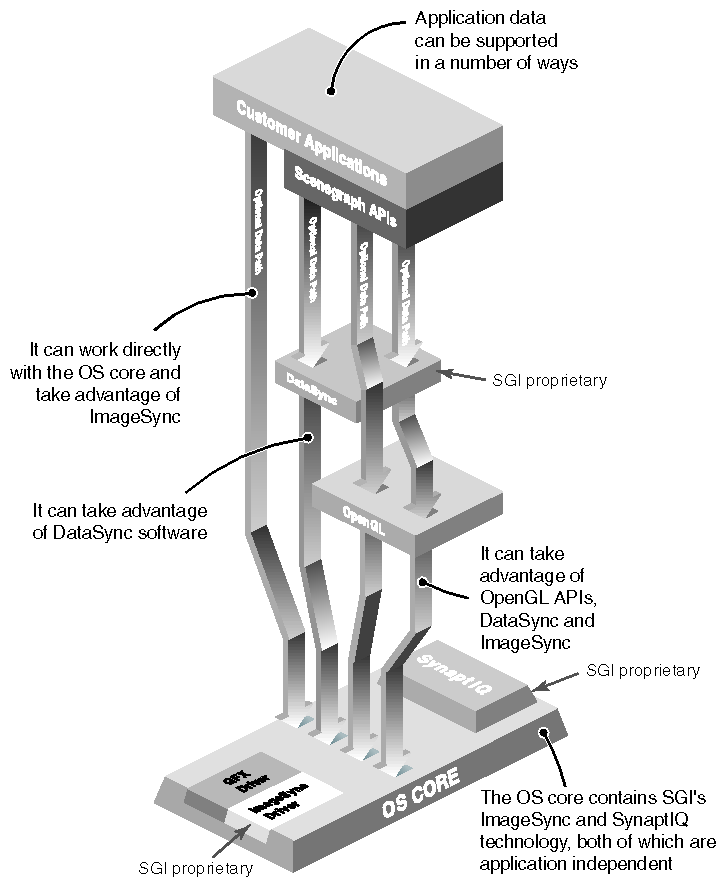
The software for the SGI Graphics Cluster Series 12 consists of the following:
Operating system (Windows NT 4.0 or SGI Linux kernel with XFS support (2.4.2-5SGI-137 or greater)
SGI ImageSync device drivers
SGI SynaptIQ (Linux systems only)
SGI DataSync (Linux systems only)
Figure 1-2 illustrates the software architecture.
SGI DataSync attempts to provide a simulated single-system image (SSI) interface to distributed applications running on a cluster. Although compute applications have long used packages like Message Passing Interface (MPI) to parallelize codes across a cluster, a similar fabric has been missing in the rendering arena. SGI DataSync handles the complexity of breaking up and reassembling graphics data in a cluster environment and of rendering an application across multiple pipes.
The software core creates a shared arena style module within each node. A library call then creates named blocks within this shared arena. These blocks of memory can then be selectively shared across the nodes to provide a transparent mechanism for sharing data.